HVAC websites built to win agreements, not just service calls.
Websites for US heating, ventilation and air conditioning companies — NATE and EPA 608 credentials up front, a 24/7 emergency line, and planned maintenance sold with response times attached.
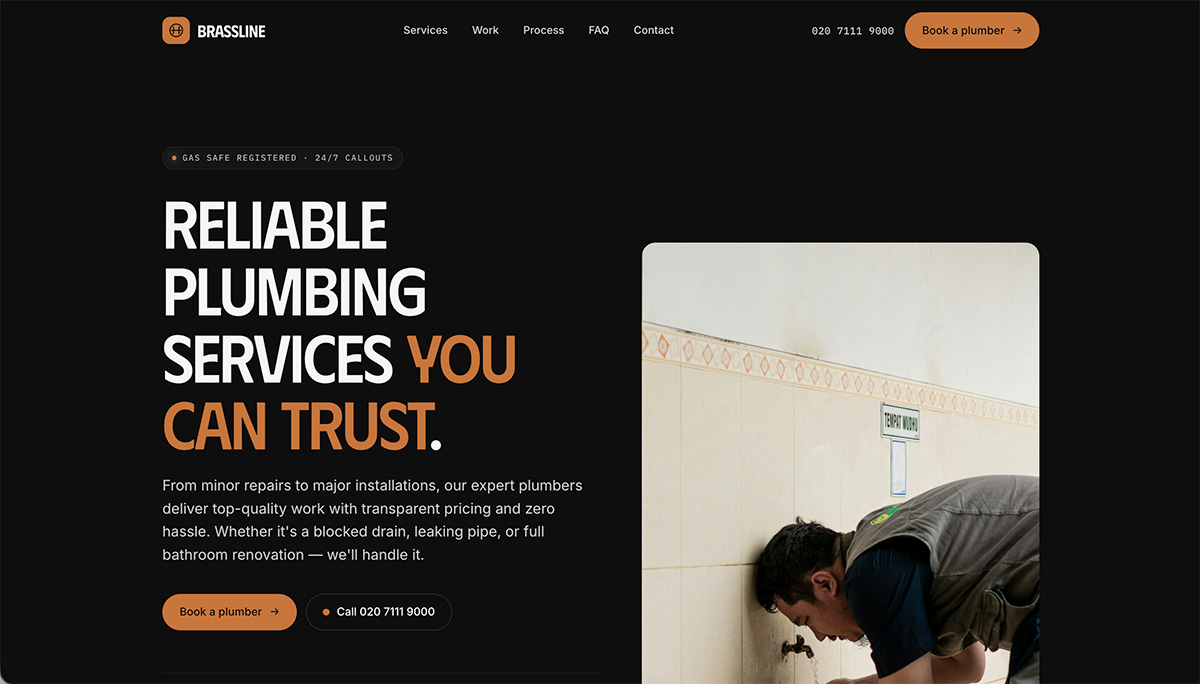
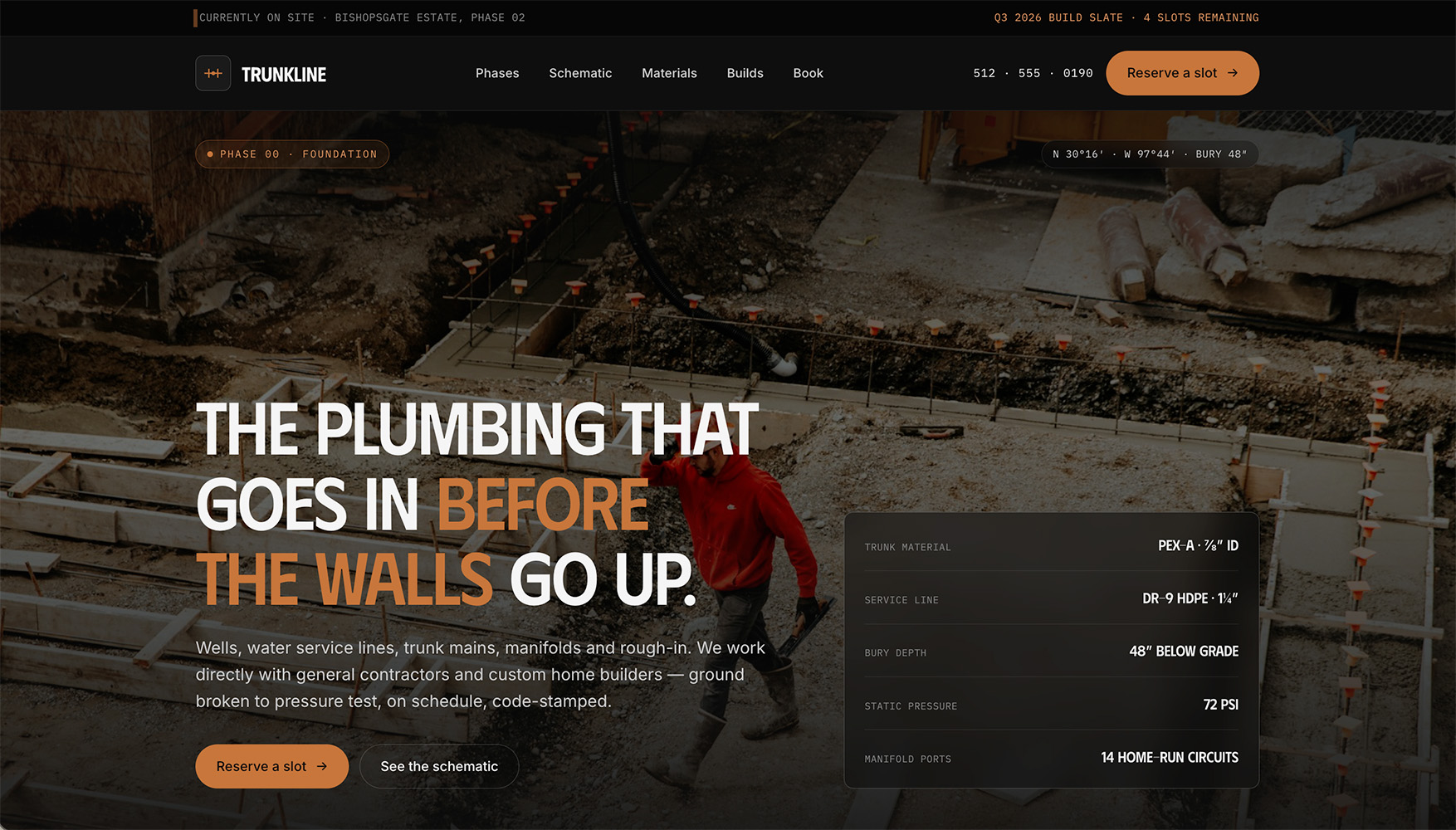
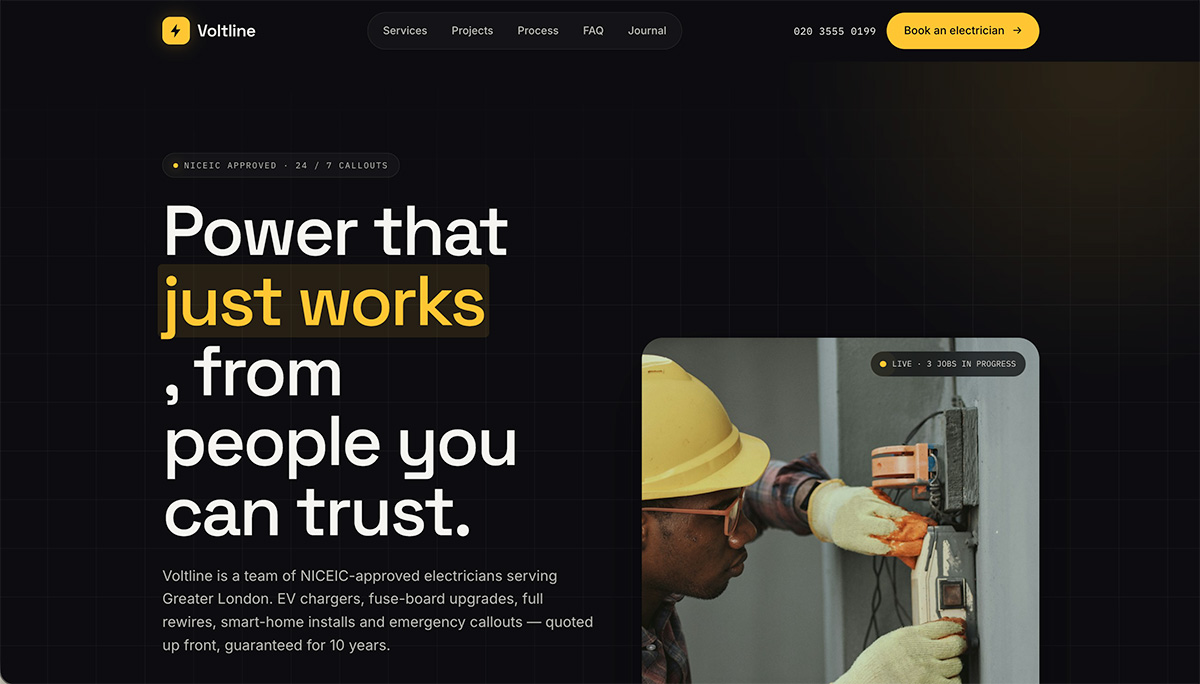
The closest builds in our library — mechanical services, plumbing, and electrical. Open any of them to see how a system list, credentials strip and emergency route sit together.
One-off breakdowns pay the wages; maintenance agreements pay for the business. Most HVAC sites are built entirely for the first and say nothing that would persuade a facilities manager to hand over a portfolio of equipment.
Sell the agreement, not just the service call.
Planned preventive maintenance is what makes an HVAC company worth something. Set it out properly: visit frequency, what gets checked, response times, holiday coverage, and what a breakdown costs an agreement customer against a stranger.
Lead with NATE and EPA 608, and mean it.
NATE-certified technicians, EPA 608 refrigerant certification, a state mechanical contractor license, ACCA or SMACNA membership, manufacturer dealer status. Facilities managers check these before they call, because their own compliance depends on it.
Answer the breakdown at 3pm on a Friday.
A failed chiller in a server room or dead heat in a senior living facility is a same-hour decision. Your after-hours number, coverage area and honest response window belong at the top of the screen, not on a contact page.
Split commercial and residential.
A homeowner pricing an $8k–$15k system with the federal tax credit and a facilities manager bidding three years of maintenance on forty rooftop units want nothing in common. Two routes, two sets of pages, two sets of search terms.
What's in the site
Built around how HVAC companies win work.
Every feature either brings in an emergency call, moves a customer onto an agreement, or answers a compliance question before it gets asked.
01
Maintenance agreement pages with real detail.
Service levels side by side — visit frequency, equipment covered, response times, the parts and labor position, after-hours coverage. A facilities manager can shortlist you straight from the page without booking a meeting.
02
A page per system type.
Central AC and mini-splits, VRF, chillers, rooftop units and ventilation, furnaces and boilers, air source and geothermal heat pumps, ductwork design and sealing, indoor air quality and duct cleaning — each its own page and its own search.
03
Credentials strip with license numbers.
NATE, EPA 608, state mechanical license, ACCA, SMACNA and RSES where you hold it, plus manufacturer dealer status — in the header, linked to the state board lookup. No certification, no badge; we leave it off rather than imply it.
04
Heat pump, SEER and tax-credit pages.
Heat pumps, SEER2 ratings and the federal 25C tax credit and utility rebates explained without the sales gloss, plus a suitability checker capturing home type, current system and square footage. Homeowners researching the credit are as close to a qualified inquiry as heat pump traffic gets.
05
24/7 emergency route.
Emergency number sticky on mobile, a coverage map, honest response windows for agreement and non-agreement customers, and a fault form capturing address, equipment type and access details so the technician arrives with the right parts.
06
Commercial-SEO foundation.
Schema markup, system-type pages, sector pages for offices, retail, server rooms, senior living and industrial buildings, and metro targeting for the areas your technicians actually cover.
FAQ
HVAC & Heating website FAQs.
The questions hvac & heatings ask before they hit the “get a price” button.
How much does an HVAC website cost in the US?
An HVAC website from ConstructionWebExperts is $2,000, fixed price, or $3,000 with branding. Freelancers charge $75–$150/hour and agencies want $10,000–$40,000 per project over 8–12 weeks. Hosting and SSL are included for the first year, and there are no monthly fees.
How long does it take to build an HVAC website?
Seven days from kickoff to live. ConstructionWebExperts starts from a proven mechanical-services layout, loads your system pages, NATE and EPA 608 details, agreement tiers and reviews, and ships it.
What should an HVAC company website include?
NATE and EPA 608 credentials and a state license number in the header, a page per system type, maintenance agreement tiers with response times, a 24/7 emergency number, sector pages for the buildings you cover, and separate routes for commercial and residential customers.
Do we need to show our EPA 608 certification on the website?
Yes — it is the first thing a commercial customer checks, and anyone handling refrigerant needs it by law. We put the certification and state license number in the header, linked so it can be verified, rather than as a logo lost in the footer.
How do we win more maintenance agreements instead of one-off service calls?
Publish what an agreement actually includes, and what it costs to be without one. Most HVAC sites hide maintenance behind a contact form; setting out visit frequency, response times and the priority agreement customers get is what turns an emergency call into an annual agreement.
Should heat pumps have their own section?
Yes. Heat pump buyers search differently from furnace or air conditioning customers — they research SEER2 ratings, the federal 25C tax credit, utility rebates, operating costs and sizing long before they contact anyone. A section answering those questions catches them at the research stage.
Can the site cover both commercial and residential work?
Yes, with a split at the top level. Commercial buyers want agreements, compliance and response times; homeowners want price, tax credits and reassurance. A single homepage trying to serve both means neither finds what they came for.
Do you do SEO for heating and air conditioning companies?
Yes. Every HVAC site ships with SEO baked in: schema markup, Google Business Profile setup, a page per system type, sector pages for the buildings you maintain, and metro targeting for the areas your technicians actually cover.
More categories
Built for other trades too.
Same approach, tuned to each trade — pick yours and see a landing page built just for it.